
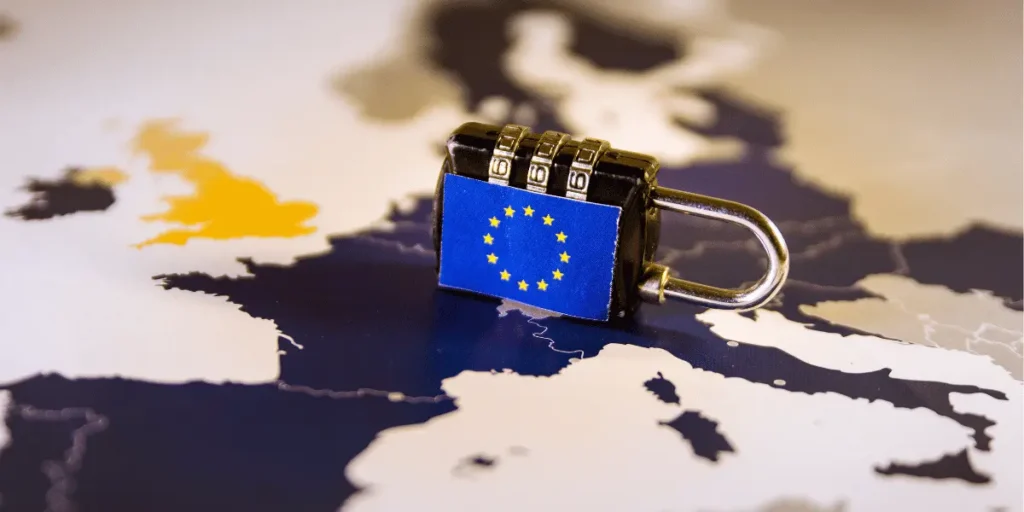
What is GDPR and why should you care? GDPR, or the General Data Protection Regulation, is the main European Union framework governing the protection and processing of personal data.
It became applicable on 25 May 2018 and strengthened the rights of individuals while introducing clear responsibilities for organisations that collect, use, store, share, or otherwise process personal data.
GDPR matters because personal data is processed almost every day. It may include a person’s name, contact information, identification details, location data, online identifiers, financial information, health information, or other data that can identify an individual directly or indirectly.
The Regulation applies not only to many organisations established in the European Union but also, in certain circumstances, to organisations outside the EU that offer goods or services to people in the EU or monitor their behaviour. Data protection is recognised as a fundamental right under EU law.
Why is GDPR important for individuals?
GDPR gives individuals greater control over how organisations use their personal data. Organisations must process data lawfully, fairly, and transparently and should collect only the data necessary for a clearly defined purpose.
People also have the right to receive understandable information about the processing of their data. This includes information about why the data is collected, how it will be used, how long it may be kept, and with whom it may be shared.
Right of access
Individuals may ask an organisation whether their personal data is being processed and request access to that data together with relevant information about the processing.
Right to rectification
When personal data is inaccurate or incomplete, an individual may request that the organisation correct or complete it.
Right to erasure
The right to erasure is often called the “right to be forgotten.” Under certain conditions, individuals may request the deletion of their personal data.
This right is not absolute. An organisation may sometimes need to keep the data because of a legal obligation, public interest, or the establishment, exercise, or defence of legal claims.
Right to restriction of processing
Individuals may request that the use of their data be restricted in certain situations. The organisation may then retain the data but may be limited in how it can continue to process it.
Right to data portability
In applicable circumstances, individuals may receive personal data they provided in a structured, commonly used, and machine-readable format. They may also request that the data be transmitted to another organisation where technically feasible.
Right to object
An individual may object to certain processing, including processing based on legitimate interests and processing for direct marketing purposes.
GDPR also establishes protections relating to decisions based solely on automated processing when those decisions produce legal or similarly significant effects.
What obligations does GDPR impose on organisations?
Organisations must be able to demonstrate that their personal-data processing complies with GDPR. Compliance therefore involves more than simply publishing a privacy policy.
A lawful basis for processing
A common misconception is that companies always need consent to process personal data. Consent is only one possible lawful basis.
Depending on the circumstances, processing may also be based on:
- performance of a contract;
- compliance with a legal obligation;
- protection of vital interests;
- performance of a task in the public interest;
- legitimate interests pursued by the controller or a third party.
Where consent is used, it must meet GDPR requirements and must be freely given, specific, informed, and unambiguous.
Transparency and clear information
Organisations must explain their processing activities in a concise, accessible, and understandable manner. Privacy notices should clearly state the purpose of processing, the relevant lawful basis, retention periods, recipients of data, and the rights available to individuals.
Data minimisation and purpose limitation
An organisation should collect only the data that is relevant and necessary for its stated purpose. Personal data should not be gathered simply because it may become useful at some point in the future.
The data should also not be reused for an incompatible purpose without an appropriate legal basis.
Security measures
Controllers and processors must implement appropriate technical and organisational measures to protect personal data.
Depending on the risks, these measures may include:
- access controls;
- encryption;
- secure backups;
- staff training;
- internal policies;
- incident-response procedures;
- regular security testing;
- clear responsibilities for handling personal data.
The appropriate level of security depends on factors such as the type of data, the purpose of processing, the likelihood of misuse, and the possible consequences for individuals.
When must a Data Protection Officer be appointed?
Not every organisation is required to appoint a Data Protection Officer.
A DPO is required in certain circumstances, including where the core activities involve regular and systematic large-scale monitoring or large-scale processing of special categories of personal data. Public authorities and bodies are also generally required to appoint one, subject to the rules of the Regulation.
The DPO advises the organisation on compliance, monitors relevant practices, supports awareness and training, and cooperates with the supervisory authority.
What happens when a personal data breach occurs?
A personal data breach may involve accidental or unlawful destruction, loss, alteration, unauthorised disclosure of, or access to personal data.
Where a breach is likely to result in a risk to individuals’ rights and freedoms, the controller must generally notify the competent supervisory authority without undue delay and, where feasible, within 72 hours after becoming aware of it.
Where the breach is likely to result in a high risk to individuals, the affected people may also need to be informed without undue delay.
Not every security incident requires notification, but organisations should assess and document breaches carefully.
Why should businesses care about GDPR?
The answer to what is GDPR and why should you care is not limited to the risk of regulatory sanctions. Effective compliance can improve the way an organisation manages information and communicates with clients, employees, and business partners.
Greater customer trust
People are more likely to trust an organisation that clearly explains how it uses their data and responds properly to privacy requests.
Improved data security
GDPR compliance encourages organisations to identify what data they hold, who can access it, why it is retained, and how it is protected.
This can reduce the likelihood and impact of data loss, unauthorised access, and misuse.
Better internal organisation
Maintaining records of processing activities and assigning responsibilities can help organisations remove unnecessary information, improve procedures, and react more efficiently to incidents.
Reduced legal and financial risk
Non-compliance may lead to investigations, corrective measures, reputational damage, compensation claims, and administrative fines.
A structured compliance programme can reduce these risks and help an organisation demonstrate accountability.
Competitive advantage
Organisations that treat privacy as part of their service quality may distinguish themselves from competitors, especially when working with clients and partners that require strong data-protection standards.
Does GDPR apply only to large companies?
GDPR does not apply only to multinational corporations. Small and medium-sized businesses, associations, professional practices, online services, public bodies, and other organisations may also fall within its scope.
The exact obligations depend on the processing activities and risks involved. A small organisation may not need the same compliance structure as a large technology company, but it must still understand what personal data it processes and comply with the relevant rules.
The European Data Protection Board provides practical GDPR guidance designed specifically for small and medium-sized organisations.
Why GDPR knowledge matters for legal professionals
Lawyers increasingly advise clients on privacy notices, employment data, marketing activities, contracts with processors, international data transfers, cybersecurity incidents, and the use of artificial intelligence.
Understanding GDPR is therefore important not only for data-protection specialists but also for lawyers working in corporate law, employment law, litigation, technology, compliance, banking, healthcare, and public administration.
Knowing how to identify lawful bases, allocate controller and processor responsibilities, respond to individual requests, and assess potential breaches is becoming an essential part of modern legal practice.
GDPR and the International Congress of Lawyers
The International Congress of Lawyers will address data protection, artificial intelligence, cybersecurity, and other legal challenges connected with modern technology.
Through lectures, panels, discussions, and professional networking, participants will have an opportunity to examine how GDPR operates in practice and how legal professionals and organisations can respond to regulatory and technological developments.
Understanding what is GDPR and why should you care is the first step. The next step is learning how its principles and obligations apply to real situations involving employees, clients, online platforms, business partners, and new technologies.iding you with detailed knowledge and tools needed for compliance with these regulations.